📰 Makale
The Ultimate Buyer’s Guide to Yacht Charters in Turkey: Navigating the Process, the APA, and Local Regulations
13 Temmuz 2026 · 5 dk okuma

The Turkish Riviera, stretching from the Aegean coast down to the Mediterranean, offers one of the most spectacular cruising grounds in the world. However, chartering a luxury motor yacht or a traditional wooden Gulet is a complex operational process, not just a simple hotel booking.
For international clients, understanding the maritime realities, the financial structures, and the legal framework of Turkish territorial waters is the key to a seamless “Blue Voyage.” Written from the perspective of professional marine surveyors and licensed captains, this guide strips away the marketing fluff to reveal how a successful charter is actually built.
1. Choosing the Right Vessel: Why Volume Matters More Than Length
When international clients browse charter listings, the instinct is to filter by LOA (Length Overall). However, in professional yachting, length is often a misleading metric for comfort.
Instead of just looking at the length, you must consider the Gross Tonnage (GT)—the true internal volume of the yacht. A 24-meter sporty open cruiser and a 24-meter expedition yacht may have the same LOA, but the expedition yacht could have double the GT, translating to significantly larger cabins, higher ceilings, and more deck space.
Furthermore, if anyone in your party is prone to seasickness, hull form and stabilization are critical. Modern motor yachts equipped with zero-speed stabilizers (gyroscopes or hydraulic fins) or wide-beam catamarans offer vastly superior form stability at anchor compared to narrow, older-generation monohulls.
2. Decoding the APA (Advance Provisioning Allowance)
The biggest point of friction for first-time luxury charter clients is misunderstanding the financial structure. Unless you are booking a lower-end “all-inclusive” Gulet, luxury yacht charters operate on a “Plus Expenses” basis, managed through the APA.
The APA is an upfront deposit—typically 25% to 30% of the base charter fee—transferred before embarkation to fund the operational costs of your specific itinerary.
What You Are Actually Paying For
| Expense Category | Covered by Base Charter Fee | Covered by the APA |
| The Vessel | Yacht hire, equipment, and insurance | – |
| The Crew | Captain and crew wages | Crew gratuity (tip), usually 10-15% |
| Consumables | – | Fuel for main engines, generators, and tenders |
| Food & Beverage | – | All guest groceries, fine wines, and spirits |
| Berthing & Fees | – | Private marina fees, customs, and Transitlog |
How it works in practice: The Captain acts as your financial manager during the trip, keeping a detailed ledger and receipts for every purchase made from the APA fund. At the end of the charter, the Captain presents the spreadsheet. If there is money left over, it is refunded to you in cash before you disembark. If your itinerary required excessive high-speed cruising or rare vintage wines, and the APA runs low, you will be asked to top it up mid-charter.
3. Cruising Realities and Turkish Territorial Rules
Cruising the Turkish coast is governed by strict maritime laws and environmental regulations. Understanding these rules ensures your itinerary is realistic and legally compliant.
The Transitlog
The Transitlog is the official cruising permit issued by Turkish port authorities. It dictates exactly who is on board and the yacht’s authorized route. If you plan to cross into Greek waters (the Dodecanese islands) during a Turkey-based charter, the yacht must officially clear out of Turkish customs and clear into Greece. This process consumes both APA funds (customs fees, agents) and valuable holiday time. For a one-week charter, it is highly recommended to stay within a single country’s waters.
Environmental Protection: The “Blue Card” System
Turkey enforces some of the strictest marine environmental laws in the Mediterranean. Every charter yacht is monitored via a digital tracking system called the Mavi Kart (Blue Card). Yachts are strictly forbidden from discharging black or grey water into the sea in bays or gulfs (such as the heavily protected Göcek region). They must pump out their holding tanks at designated waste-reception facilities. Your Captain will factor these mandatory pump-out stops into your itinerary.
Distance vs. Time: The VMG Reality
A common mistake is treating a yacht like a cruise ship, demanding to wake up in a new, distant port every morning. In sailing and yachting, weather dictates the route. When sailing upwind, the yacht’s Velocity Made Good (VMG)—the actual effective speed toward your destination—drops significantly. Trust your Captain when they suggest a sheltered, localized itinerary over a grueling, long-distance dash.
The Captain’s Ultimate Authority
Under international maritime law and the ISM (International Safety Management) Code, the Captain is the highest authority on board. Their primary legal obligation is the safety of the vessel and human life, not hospitality. If the Captain refuses to anchor in a specific bay due to shifting winds, or delays departure due to a storm warning, it is not a suggestion—it is a final, legal decision.
A successful charter is built on a partnership between the client’s desires and the crew’s nautical expertise. By understanding the true function of the APA and respecting the maritime environment, you guarantee a safe, transparent, and unforgettable experience on the water.
Sıradaki okuma
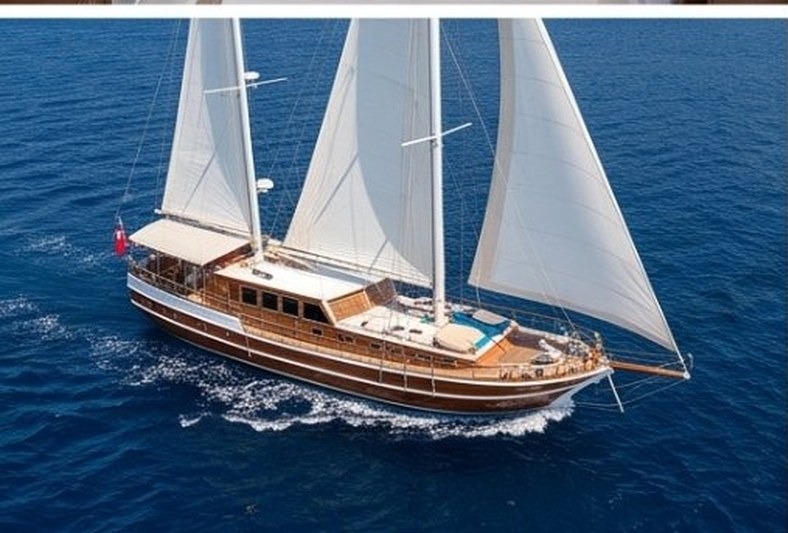 Gulet rehberi: Türk guletinin tarihi, tipleri, charter ve satın almaGulet nedir? Gulet, Türkiye'ye özgü geleneksel ahşap motorlu yelkenli tekne tipidir. Geniş kıç güvertesi, yuvarlak kıç…
 Tekne kiralama rehberi: bareboat, kaptanlı kiralama, fiyatlar ve sözleşmeTekne kiralamaya genel bakış Tekne sahibi olmadan denizin keyfini çıkarmak isteyenler için kiralama en pratik yoldur.…
 Mavi yolculuk planlama rehberi: rota, bütçe, ekipman ve sezon seçimiMavi yolculuk, Türkiye'nin denizciliğe en büyük katkılarından biri. 1940'lı yıllarda yazar Cevat Şakir Kabaağaçlı'nın (Halikarnas Balıkçısı)…
Sıradaki adım
İlgili makaleler
Tümü → 📰 MakaleTekne vergi ve harçları rehberi: ÖTV, KDV, bağlama kütüğü ruhsatname harcı ve gümrük21 Eki 2026Tekne alımında ve sahipliğinde hangi vergiler ödenir? ÖTV, KDV oranları, ruhsatname harcı ve muafiyetler.
 📰 MakaleGece seyri rehberi: tekne ile karanlıkta güvenli seyir kuralları ve hazırlık21 Eki 2026Teknede gece seyri nasıl yapılır? Fener kuralları, gece görüşü ve güvenlik ipuçları.
 📰 MakaleTekne tescil ve bağlama kütüğü rehberi: kayıt işlemleri, gerekli belgeler ve süreç21 Eki 2026Tekne tescili nasıl yapılır? Bağlama kütüğü kaydı, gemi siciline kayıt ve gerekli evraklar.