📰 Makale
Buying a yacht in Turkey: a foreigner’s complete guide
20 Ekim 2026 · 7 dk okuma
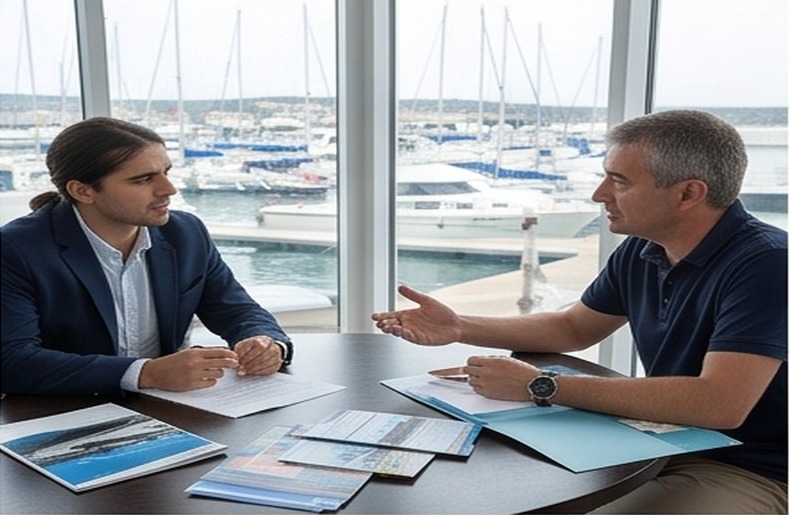
Turkey has become one of the most attractive yacht markets in Europe for foreign buyers. A combination of skilled boatyards, competitive pricing, world-class cruising grounds and a favorable exchange rate has drawn buyers from the UK, Germany, the Netherlands, Scandinavia, the US and the Middle East. Whether you are looking at a production fibreglass cruiser, a classic wooden gulet or a steel bluewater sailboat, Turkey offers more choice per euro than almost any other Mediterranean country.
This guide walks you through the entire process from first search to ownership, with practical details you will not find in most broker listings.
Why buy in Turkey?
The Turkish yacht market has several structural advantages. Labour and material costs are lower than in Western Europe, which means boats built or maintained in Turkey often represent better value. The country has a long coastline stretching from the Aegean to the Eastern Mediterranean, and the boatbuilding tradition here goes back centuries. Yards in Antalya, Bodrum, Fethiye and Tuzla produce everything from 6-metre tenders to 50-metre superyachts.
Beyond the boats themselves, operating costs in Turkey are significantly lower. Marina fees along the Aegean coast run 30 to 50 percent below comparable locations in Greece, Croatia or the French Riviera. Haul-out and yard work prices reflect the local economy, meaning annual maintenance budgets stretch further.
The cruising grounds speak for themselves. The Turquoise Coast from Bodrum to Antalya is one of the most sheltered and scenic sailing areas in the Mediterranean. Hundreds of anchorages, many accessible only by boat, line the coast. Summer winds are predictable, the water is warm and clear, and provisioning at small coastal towns is easy and affordable.
Legal framework for foreign buyers
Foreign nationals can legally own a yacht in Turkey. There is no requirement for Turkish citizenship or residency. However, there are specific procedures depending on how the boat will be registered.
The two main paths are Turkish flag registration (baglama kutugu) and keeping the boat under a foreign flag. Each has different tax, documentation and operational implications. Turkish flag registration is handled through the local harbour master (liman baskanligi) and requires a Turkish tax number. Foreign flag boats can stay in Turkish waters under a transit log (transit log belgesi) that must be renewed periodically.
For EU citizens, another consideration is VAT status. A yacht that has been VAT-paid in an EU country carries that status; once you bring it into Turkey and register under Turkish flag, the EU VAT status may be lost if you later want to sail the boat in EU waters. Conversely, a Turkish-flagged boat can cruise EU waters for up to 18 months under temporary admission without triggering EU VAT.
VAT and customs
Turkey applies 20 percent VAT (KDV) on new yacht purchases. For second-hand sales between two parties inside Turkey, VAT typically does not apply again if the boat was already in the Turkish market. If you import a yacht from abroad into Turkey, customs duties and VAT will be assessed based on the declared or appraised value.
There is a temporary import regime (gecici ithalat) that allows foreign-flagged boats owned by non-residents to stay in Turkish waters without paying import duties. This regime is widely used by European owners who keep their boats in Turkey year-round but maintain foreign flag registration. The temporary import permit must be renewed and the boat must leave Turkish waters periodically to maintain the exemption.
Tax planning around yacht purchases in Turkey can be complex, especially when multiple jurisdictions are involved. Working with a maritime lawyer who understands both Turkish and EU regulations is strongly recommended.
Flag registration options
Turkish flag (baglama kutugu)
Registering under Turkish flag gives you full rights to operate commercially in Turkish waters, including charter. The process involves obtaining a Turkish tax number, submitting ownership documents to the local harbour master, and passing a technical inspection. Annual registration fees are modest, typically ranging from a few hundred to a few thousand lira depending on the vessel’s gross tonnage. The main advantage is simplicity of operation within Turkey and lower annual costs.
Foreign flag
Many foreign owners keep their yachts under their home country’s flag or choose a flag state like the UK, Malta, or the Netherlands. This avoids Turkish import duties and preserves EU VAT-paid status where applicable. The trade-off is that you cannot charter commercially in Turkish waters, and you need to manage the transit log renewal process. Some flag states also require periodic survey or inspection by their own surveyors or recognized classification societies.
Finding the right boat
Start your search online to understand what is available and at what price point. Listings on teknemerkezi.com cover a wide range of boats in Turkey, from small fishing boats to large motoryachts. When you have identified candidates, arrange viewings. If you are travelling from abroad, plan a trip of at least a week so you can see multiple boats in person.
Never buy a boat based on photos and a broker’s description alone. Boats photograph well, and issues like osmosis, engine wear, rigging fatigue and electrical problems are invisible in pictures. Plan to see each candidate hauled out or at least with the waterline visible.
If you do not speak Turkish, work with someone who does. Many technical and legal documents are in Turkish only, and miscommunication during negotiation can be costly. A bilingual surveyor or buyer’s agent can bridge this gap effectively.
The survey: your most important investment
Before committing to any purchase, commission an independent pre-purchase survey. This is not optional. A professional survey examines hull condition, structural integrity, engine health, electrical and plumbing systems, safety equipment, rigging (on sailboats) and deck hardware. The resulting report classifies findings into severity categories and gives you a clear picture of the boat’s true condition and what repairs or upgrades it will need.
The survey should be conducted by an independent professional who has no financial interest in the sale going through. Budget approximately 2 to 5 percent of the purchase price for a thorough survey, depending on the boat’s size and complexity. This investment regularly saves buyers from purchasing boats with hidden problems worth many times the survey fee.
For professional independent survey services in Turkey, visit our survey page or call +90 501 5 SURVEY (78 78 39).
Step-by-step buying process
1. Define your requirements: Be specific about intended use, crew size, cruising area, budget (including first year of ownership costs) and whether you plan to charter.
2. Search and shortlist: Use online listings, broker networks, and yard contacts. Shortlist 3 to 5 serious candidates.
3. First viewings: Visit each boat in person. Check the general condition, talk to the current owner if possible, and note any red flags.
4. Make an offer (subject to survey): Your offer should be conditional on a satisfactory independent survey. This is standard practice and any serious seller will accept it.
5. Commission the survey: Book an independent surveyor. The boat should be hauled out for the hull inspection. Allow 1 to 2 days for the survey itself.
6. Review the survey report and negotiate: The survey findings often justify renegotiation. Items classified as requiring immediate attention become bargaining points.
7. Agree final terms and escrow: Once the price is agreed, use an escrow arrangement to protect both parties. The funds are held by a neutral third party until all conditions are met.
8. Legal transfer: For Turkish-flagged boats, the transfer is handled at the harbour master’s office. Both parties must be present (or represented by power of attorney). For foreign-flagged boats, the process depends on the flag state’s requirements.
9. Insurance: Arrange hull and machinery insurance before taking delivery. Third-party liability insurance (P&I) is also recommended, and required for some marinas and flag states.
10. Handover: A proper handover includes a detailed photographic inventory of the boat, its equipment and its current condition. This documents the state at transfer and protects both parties.
For current listings of boats for sale in Turkey, visit our marketplace.
İlgili makaleler
Tümü → 📰 MakaleTekne vergi ve harçları rehberi: ÖTV, KDV, bağlama kütüğü ruhsatname harcı ve gümrük21 Eki 2026Tekne alımında ve sahipliğinde hangi vergiler ödenir? ÖTV, KDV oranları, ruhsatname harcı ve muafiyetler.
 📰 MakaleGece seyri rehberi: tekne ile karanlıkta güvenli seyir kuralları ve hazırlık21 Eki 2026Teknede gece seyri nasıl yapılır? Fener kuralları, gece görüşü ve güvenlik ipuçları.
 📰 MakaleTekne tescil ve bağlama kütüğü rehberi: kayıt işlemleri, gerekli belgeler ve süreç21 Eki 2026Tekne tescili nasıl yapılır? Bağlama kütüğü kaydı, gemi siciline kayıt ve gerekli evraklar.